
What every residential childcare provider needs to know….
The child’s psychological formulation is your business plan – what every residential childcare provider needs to know.
In residential childcare, we often talk about “placement stability,” “staff retention,” and “Ofsted ratings.” But behind all these outcomes lies something much deeper—and much more human: understanding why a child behaves the way they do. That understanding starts with one essential tool—the psychological formulation.
A psychological formulation isn’t just a clinical exercise. It’s the foundation upon which every aspect of effective residential care is built. It brings together the child’s history, relationships, trauma, strengths, and needs into a coherent story. In doing so, it answers the critical question: what has happened to this child, and how can we help them feel safe enough to heal and grow?
When a provider invests in high-quality formulations, they’re not only investing in the wellbeing of the child—they’re investing in the stability and sustainability of their entire business.
From Formulation to Business Stability
The formulation directly informs the placement plan and behaviour support plan, ensuring that the approach to care is individualised, purposeful, and therapeutic. This means every member of staff understands why a child might react in certain ways and how to respond in ways that build trust rather than escalate distress.
When staff understand the “why,” they feel competent and confident. They are more likely to use curiosity instead of control, empathy instead of frustration. This alignment between understanding and action creates a virtuous circle:
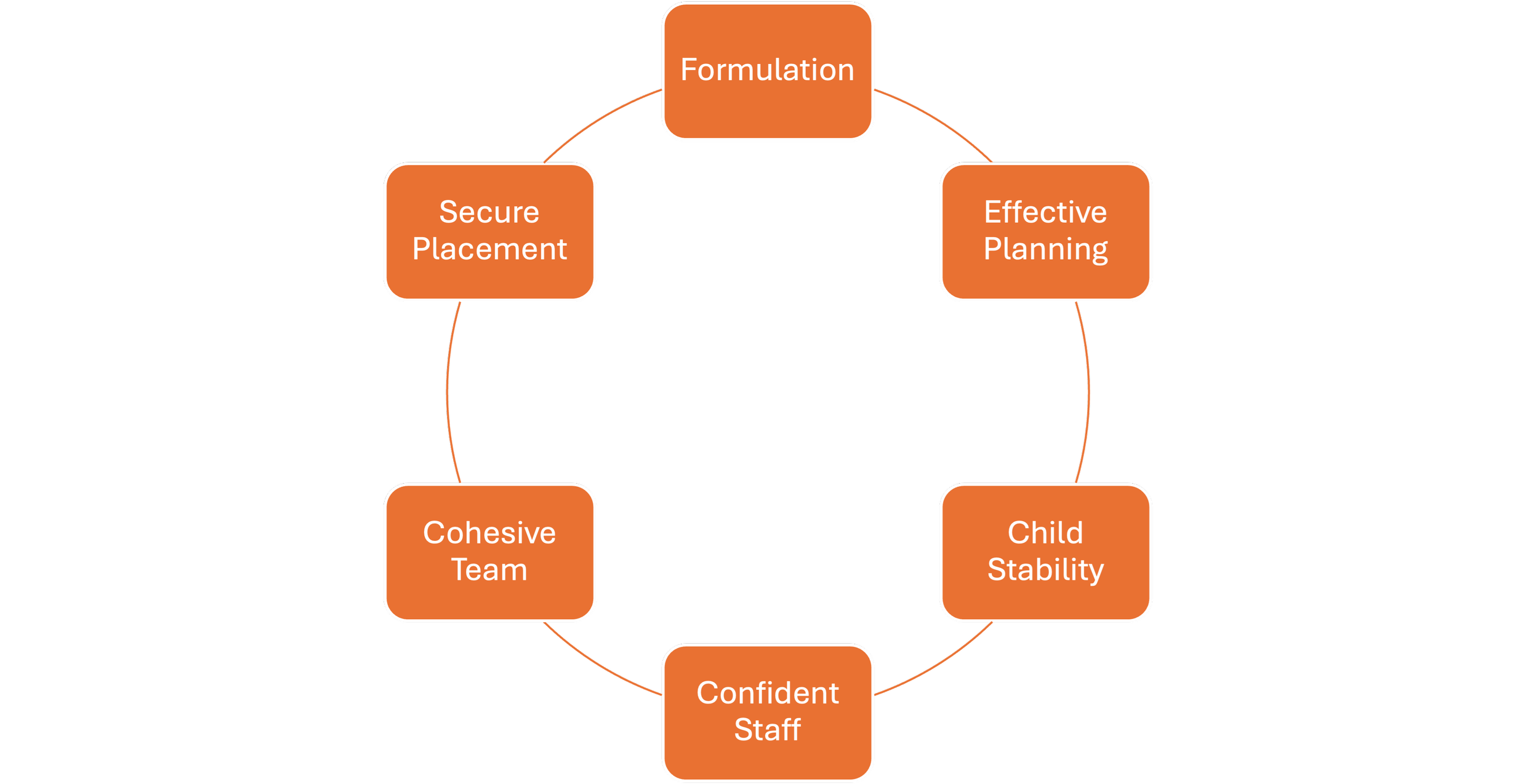
Cycle of Success
The result? A happy child, supported by happy staff, which leads to a happy and stable workforce. Staff who feel successful and valued stay longer. Reduced turnover and sickness mean fewer disruptions, lower recruitment costs, and stronger relationships—all key indicators of a stable and high-quality service.
And when placements are stable, outcomes for children improve. Ofsted recognises this. Homes with strong formulations, consistent therapeutic approaches, and secure staff teams are far more likely to achieve Good or Outstanding ratings. These are the homes that thrive—clinically, ethically, and commercially.
The Secure Base Model: The Heart of Therapeutic Parenting
At the centre of this approach lies the Secure Base Model—a framework for therapeutic parenting that helps carers meet the emotional and developmental needs of children who have experienced trauma. It focuses on five caregiving dimensions: availability, sensitivity, acceptance, co-operation, and family membership.
When these principles underpin the formulation and the care plan, children begin to experience consistency, safety, and belonging—often for the first time. They start to trust that adults will be there for them, not against them.
For providers, embedding the Secure Base Model within the psychological formulation ensures that every strategy, every response, and every policy aligns with therapeutic intent. It moves a service from being reactive to being reflective—from managing behaviour to building relationships.
The True Business Plan
If we reframe the psychological formulation as the business plan, the message becomes clear: understanding the child is the business.
A strong formulation is not an optional extra—it’s the strategic blueprint for success. It drives stability for children, reduces costs for providers, empowers staff, and strengthens regulatory outcomes.
In short, when we get the psychology right, the business follows.
Happy child. Happy staff. Strong team. Secure placement. Outstanding outcomes. Sustainable business.
When I am training staff, I often ask them to tell me their job title, invariably it is RSW etc. when I list all of the aspects of the role they laugh, and then I say, you are not ‘just’ and RSW you are a life changer. Ultimately we are in the business of changing lives.
That’s not just good practice—it’s good business.
#MindForestPsychology #PsychologicalSafety #LeadershipDevelopment #EducationSector #SocialCare #Formulation #SecureBase